
Through centuries of commercial decision-making, organisations have sought to make choices informed by the best business intelligence available at the time.
Data-driven decisions are Commerce 101. What’s new is the ocean of data intelligence now available, from our customer’s purchase history to our own corporate financial data. Despite a data deluge, business leaders will admit that the process of leveraging data consistently and meaningfully can be like treading water.
Data wrangling – getting the best of us?
The knowledge gap is one challenge – trained data scientists have rare skillsets and are few and far between.
Nevertheless, whether you’re an organisation with a designated data analysis function or one with relatively limited data science capabilities, if you’re generating data insights, you’re likely spending disproportionate amounts of time data wrangling before insights are unearthed.
Data wrangling is hands-on, ‘janitorial’ work of cleaning and loading data from one raw form to another in order to prepare it for analysis, where actual business value lies. It’s an essential task: garbage in, garbage out. But this manual process is the most time-consuming part of successful data analysis. In fact, estimates of how long data cleaning takes varies from 45% of an analyst’s time to a whopping 80%. That’s at least half the day, week, month, or year, just prepping dirty data.
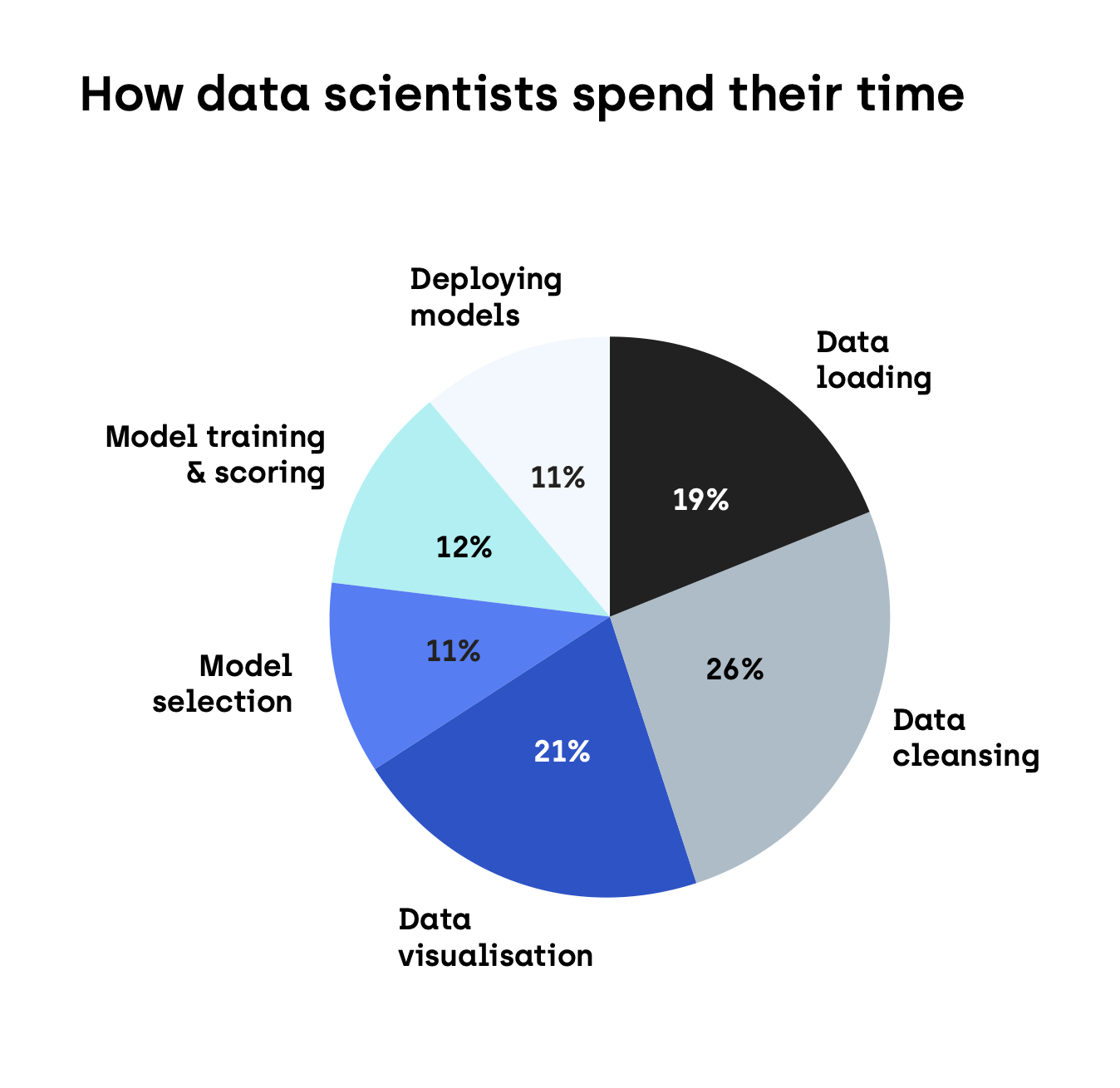
Based on data from Anaconda 2020 State of Data Science Survey.
Free your data analysts
For the business seeking to become truly data- and insight-driven (a mere aspiration for most), clawing that time back is a significant problem to bust.
Unlock that time, and there’s a huge upgrade in value from data science up for grabs; analysts will work on rewarding tasks that generate tangible business advantages that keep the organisations on the front foot, from developing models to extract unique insights, to interpreting its impact of customers and products, making predictions based on historical data, and presenting reports based on analysis to management.
In short, if you’re spending less time wrangling data, you’re spending more time realising value from it. And that’s a key distinction on the path to becoming an organisation that chases business intelligence, to one that’s driven by it.
Database vs. Data warehouse
One trait unites today’s market leaders: the ability to leverage increasing amounts of data to grow their market presence through improved customer experiences.
Many organisations are now in the throes of change, finding themselves weighed down both by data itself and the pressure to use it. An organisation could be using Excel for data reporting, relying on tens of different databases from multiple sources. A monthly reporting cycle might resemble a long painful process, with three weeks a month piecing the data together, and a week producing the end report in the correct format.
But what’s missing for most organisations right now, and what’s at the root of the data wrangling challenge, is consolidation. There is a proliferating tangle of data sources, spreadsheets, and processes – and that’s where data warehousing solutions come in.
Data warehouses enable businesses to access valuable data from multiple sources in one place, creating a single consistent source of information across the organisation.

Like the high-tech e-commerce fulfilment centres run by the likes of Amazon or Ocado, data warehouses enable efficient storage, automated categorisation, and rapid sourcing of specific items, ensuring the right product is delivered, at the snap of a finger. Source: Ocado
Some of the core benefits of a data warehouse include:
- Reduced turnaround time for more accurate reports and analysis.
- Enabling integration of multiple data sources to alleviate the production system.
- Saving users time in retrieving the correct information, and enabling greater access to data for the entire organisation.
- Storage of historical data to analyse past trends and make future predictions.
- Integration and enhancement of existing Business Intelligence and CRM systems.
- Improving the performance of transactional databases by separating the analytics process.
While a database is designed to record, a data warehouse is designed to analyse – so not only does it consolidate and unify data sources, making them easier to find, a data warehouse lays a foundation for powerful new data-driven applications and potential.
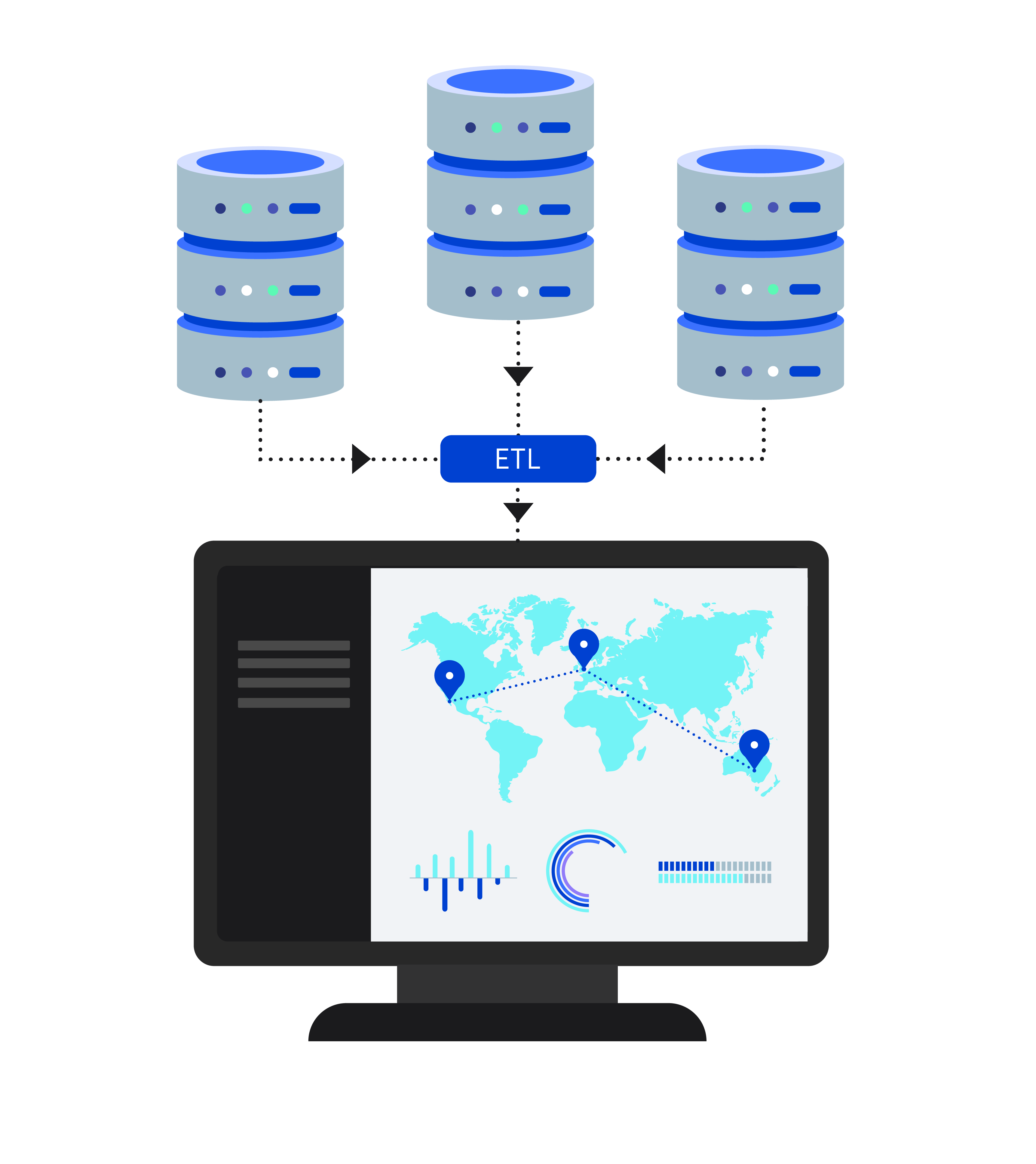
The data is extracted, transformed and loaded into the data warehouse (also known as ETL).
Airlines leverage data warehouses to assign crew or analyse optimal routes, for example, while insurance firms use them to analyse customer trends and track market movements; a retail chain might use a data warehouse for planning pricing promotions based on customer buying habits. And while these might sound like fairly advanced use cases right now, as we edge further into a data-fuelled age, innovation will become normality. Data warehousing solutions enable organisations to begin maximising the potential of their data sources, and subsequently the data talent they’ve hired, to unearth insights instrumental in driving anything from marginal gains to changing the course of the business.
illumo digital has worked with numerous partners across various industries to develop bespoke and vendor-agnostic data warehouse solutions that lay these foundations, saving partners hundreds of hours a month by getting their data house in order and, as a result, unlocking new business and market opportunities.
We have over seven years’ experience in creating data warehouses and analytics platforms that have saved clients hundreds of hours per month, unlock new business and market opportunities and evolve and develop as organisations scale and specific needs change. Our bespoke data warehouse solutions are leveraged by both small organisations scaling up for growth, and large organisations like the Royal National Lifeboat Institution (RNLI), who now make life-saving tactical decisions based on insights from their illumo digital-built data warehouse.
Working closely with partners through a seven-step process to understand their unique challenges, requirements and potential, ensures we develop an end-to-end system architecture that’s practical, accessible, secure, ready to scale with your organisation. Chiefly, we’ll work with you to build the solution you want, and a lot more.
Book a free consultation with our data warehousing experts. We’ll talk you through how we can start making your organisation truly data-driven – and make data wrangling a thing of the past.